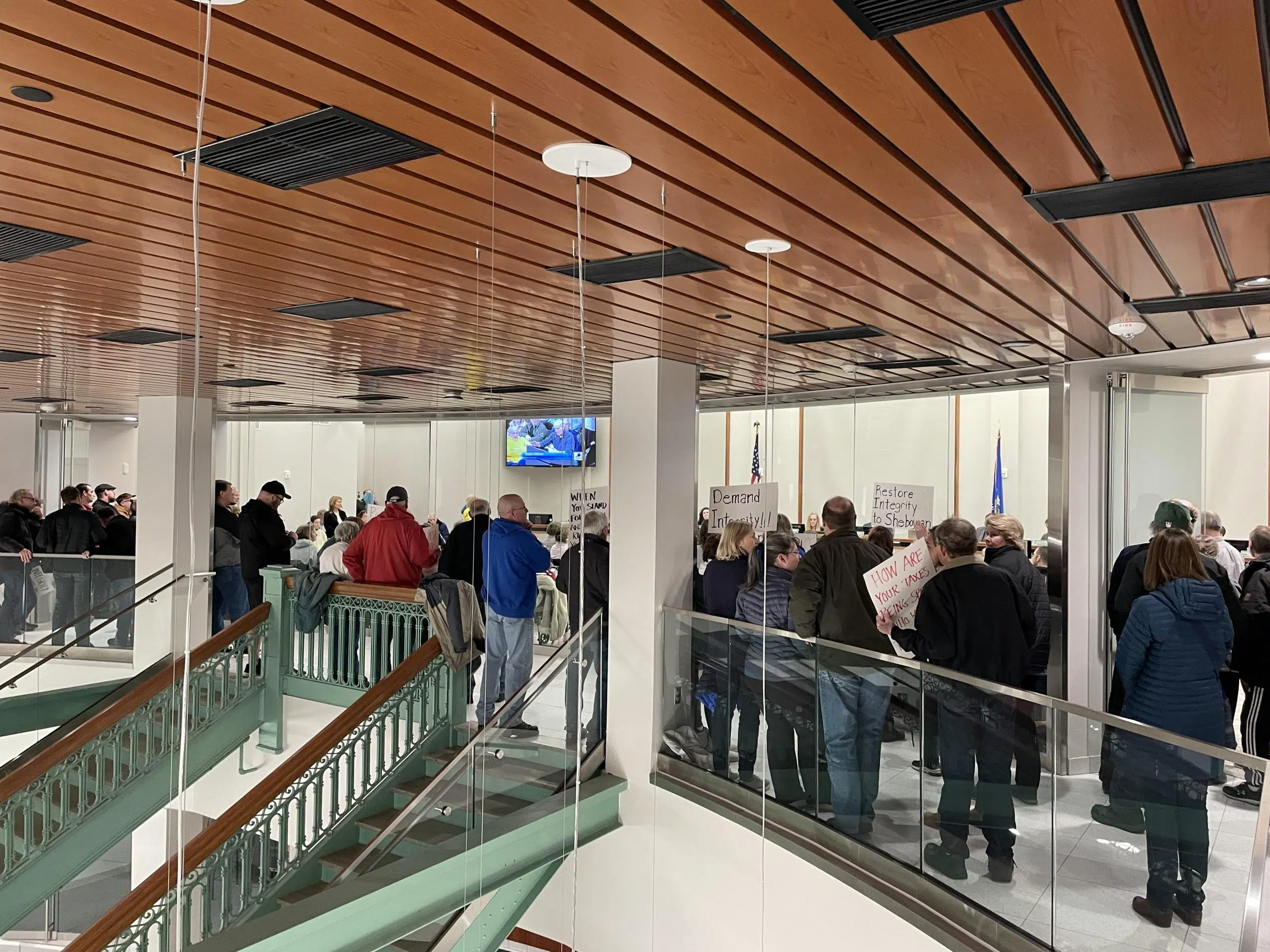
Observers at a Common Council Meeting at Sheboygan City Hall. WHBL Staff Photo
Organizers seeking to rein in the use of Tax Increment Districts, or TIDS, by City developers say they have gotten more than enough signatures to move forward. 2,702 signatures, or 103 more than required, were gathered in just 60 days, moving the initiative on to the next step: the passage of a City Ordinance that would require voter approval before the creation or approval of TID projects with eligible project costs of $10 million or more, or before approving $5 million or more in public incentives such as Municipal Revenue Obligations, cash grants, pay-as-you-go incentives and similar means of taxpayer-funded assistance. It would also prohibit confidentiality or non-disclosure agreements that conceal material financial terms of TID-related agreements.
Sheboygan Mayor Ryan Sorenson released a statement after the petition’s filing, calling the proposal “deeply concerning because it would make it significantly more difficult for Sheboygan to remain financially competitive and fiscally sustainable over the long term…”, adding that it creates additional political barriers that will delay projects, discourage investment, and weaken one of the city’s most effective tools for economic growth. The mayor also challenged the transparency of the petition drive, questioning who wrote the petition and if the writer had the proper qualifications, if AI was used, or if persons from outside of the community were involved.
Organizers said that their goal was never about limiting growth, but to give Sheboygan residents a direct vote before the City commits to large TID projects and incentives, and called the passage “…a victory for citizen participation.”
Before being enacted, the petition will need to be certified by the City Clerk and sent to the Common Council, which then has 30 days to either adopt the ordinance without alteration or decline its adoption. If they decline, then the ordinance must be submitted to the voters at the next appropriate election as provided by Wisconsin law.




Comments