Sixty-four years ago to the day – May 5, 1961 – Alan Shepherd uttered the words “Light this candle”, and became the first American to reach space atop a reconfigured missile that was originally designed to deliver nuclear bombs to another continent. Thirty years ago, Sheboygan students along with others from around the midwest first gathered at Sheboygan’s lakefront to join that adventure by building, launching and recovering their own rockets.
Rocket science has come a long way over the years, but it’s still rocket science, and there’s nothing simple behind “lighting the candle”. But the Rockets for School program was never about simple…it was about generating enthusiasm for the complex fields related to aerospace, and to share in the accomplishments of a team that can reach for the skies.
This weekend, students from Ohio, Indiana, New Jersey, Illinois and California will descend on the Blue Harbor Resort, which now stands on some of the same ground hosting launches in 1995, for two days of rocketry – the first dedicated to the construction and preparation of the rocket and project details. The second day is all about the launches; the final exams, if you will, that will be included with the presentations to determine the best of class in two categories, Class 1 and Class 2.
The top 5 teams in the Class 2 level are invited to apply to the Student Launch Initiative program offered by NASA in Huntsville, Alabama. Participating teams are contracted by NASA for two years to design and build a high-power rocket and a scientific payload to reach a defined altitude of 1 mile, or 5,280 feet.
The hands-on experience of understanding and constructing the rocket, designing a scientific payload to be carried on it, and preparing oral and a visual displays of the project to be presented is something that today could lead to real-world careers in the aerospace industry.
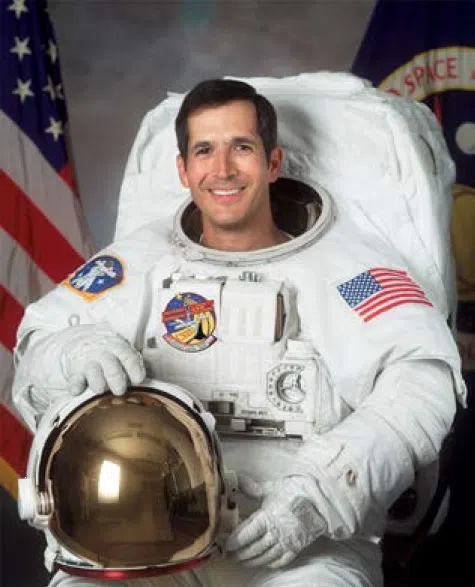
This year’s event runs both Friday and Saturday, with the keynote address Friday morning presented by Commander John Herrington, a retired astronaut who logged over 330 hours in space on STS-113, nearly 20 of those spent in the vacuum of space installing machinery on the outside of the International Space Station. Herrington is scheduled to speak at around 10:30 a.m. Friday.
This year’s Rockets for Schools program is open to the public and takes place each day from 8 a.m. until 4 p.m., with launches scheduled from 9 a.m. until 3:30 p.m. Saturday, weather permitting.




Comments